Most Egyptian online stores have a softer third quarter. Revenue eases from late June, drifts through July and August, and starts to recover in September. The word everyone reaches for is "summer", and it does three jobs at once: it describes the calendar, it explains the wallet, and it excuses the account. Only the first two are outside your control. This guide separates them, gives you a 20-minute way to tell the market's share of the drop from your own, and lays out what to run in a soft quarter so that the fourth quarter starts from strength.
Three things that get called "summer"
The calendar. The quarter opens in the days after Eid al-Adha, when household budgets have just been spent on the feast and on travel. From late June the city empties toward the coast at weekends, and a share of discretionary spending goes to the summer itself: trips, restaurants, beach and pool days. In the second half of September schools reopen, and back-to-school costs compete with everything else for the same salary. None of this is a mystery, and none of it is new. It also does not last: the same households come back in October with the same needs and a payday.
The wallet. Egyptian shoppers have learned the shape of the year. Search interest in Egypt for Black Friday sits at roughly 140 searches a month in August, climbs to about 480 in September, reaches around 1,900 in October and peaks near 6,600 in November before falling back to about 210 in December. The point is not the November number. It is that the climb starts in September. A meaningful share of buyers who would have bought a bag or a pair of trainers in late September are now waiting, because a decade of sales has taught them that waiting pays. That deferral is part of your Q3 softness, and it is demand that returns rather than demand that disappears.
The account. This is the part that gets blamed on the season and rarely is. When July's numbers come in soft, the reflex is to cut budgets, pause the weaker ad sets and run a midseason sale. Each of those moves makes the next week worse. Budget cuts push ad sets back into learning; pauses lose the buyers who still shop; the sale resets the price the customer expects to pay. By August the account is running on spring creative, a fragmented structure and a discount that no longer lifts anything, and the dip has become a slump.
Is it the market or the account? A 20-minute check
Before deciding anything, split the drop into its parts. You need your store's daily revenue for the last two years and the ad account's weekly numbers for the last eight weeks.
- Compare the same weeks against last year. If last July was 20 percent below last May, and this July is 22 percent below this May, you are looking at the market. If last year's dip was 20 percent and this year's is 45, the extra 25 points came from somewhere else.
- Split traffic from conversion. Take impressions, click-through rate and conversion rate for the last eight weeks. A market dip usually shows up as a lower conversion rate on steady traffic: the same people see the ads, fewer of them buy. A self-inflicted dip usually shows up as lower impressions, because budgets were cut or ad sets were paused, with the conversion rate roughly where it was.
- Ask which campaign carried the drop. If one campaign explains most of the decline, the cause is inside the account. Markets soften everything at once; a single campaign falling on its own is a structure or creative problem wearing a summer hat.
- Check the month-end. Egyptian demand climbs into payday every month of the year. In Mojo's Egypt beauty demand report, the peak day runs about 1.7 times a normal mid-month day. If your month-end window still shows up in July and August, the customers are still there and still paid; the trough between paydays simply got deeper. If the payday window has vanished entirely, something changed in the account or on the site.
Twenty minutes with these four checks will usually put a number on how much of the drop is yours. In our experience it is rarely zero.
The mistakes that turn a dip into a slump
Cutting budgets in steps that reset learning. The platforms treat a large budget change as a new ad set. An account that trims 40 percent in one move spends the next week relearning, at exactly the moment its owner is watching the numbers most closely. If a cut is necessary, make it in steps of 20 percent or less, a day apart, and leave the best-fed ad set alone.
Judging a rolling seven days across the payday window. A seven-day return that includes three peak days looks like a recovery, and the same metric a week later looks like a collapse. Neither is a change. Compare window with window and trough with trough, month against month.
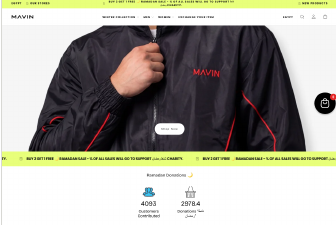
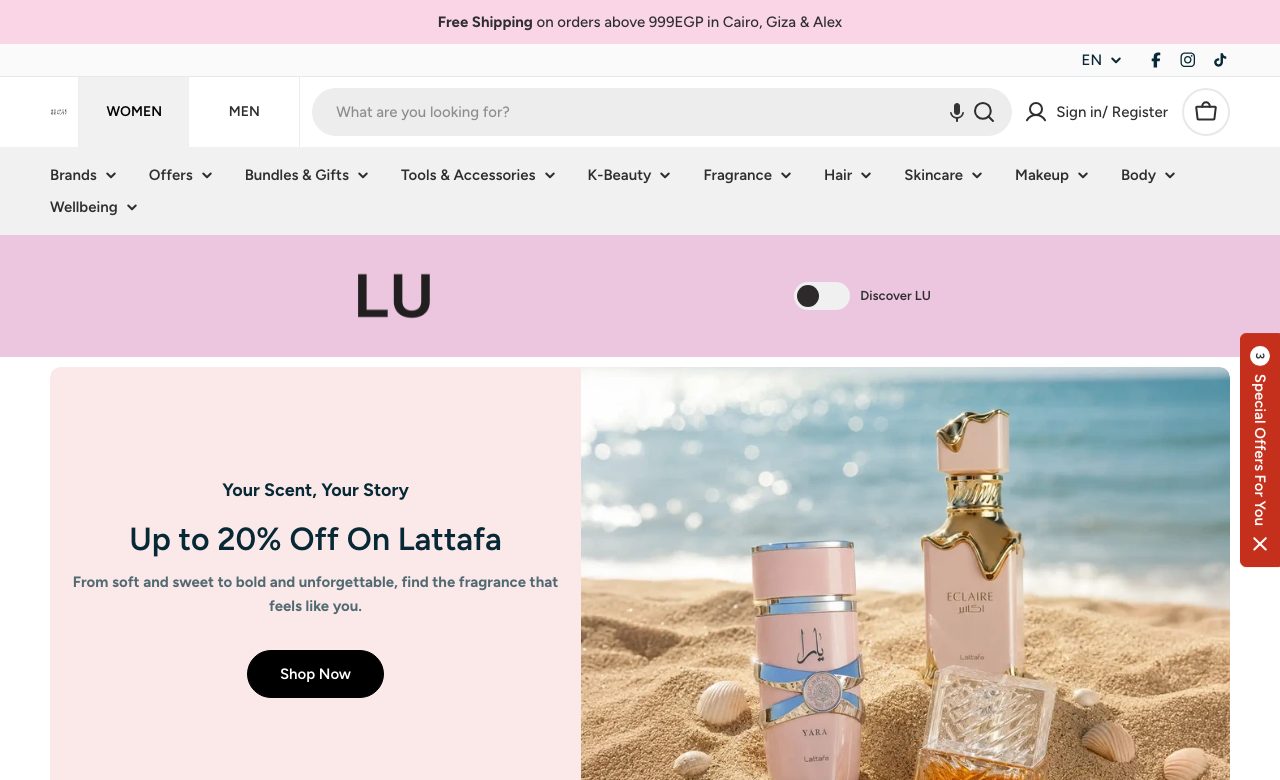
Discounting to fill the gap. In Mojo's discount census of Egyptian fashion storefronts, measured discount depths ran from 10 percent sitewide to 80 percent off, and every one of the six women's fashion brands led its homepage with a sale. A summer discount in that market buys almost no differentiation, and a sale that never ends leaves nothing to cut when Black Friday arrives. The brands that discount least, the census found, are the heritage and premium players, which is not a coincidence.
Pausing and relaunching. Off-and-on delivery loses history, loses the audiences the account was building and loses the buyers who shop regardless of the month. A smaller always-on base beats a paused account every time.
What to run in a soft quarter
Soft months are cheaper months, and cheap attention is for building the things the busy months will convert.
- Keep an always-on base and move the money inside it. If the total must come down, take it from the ad sets that were below target before the summer, not evenly across the account. Protect the structures that have exited learning.
- Buy cheaper objectives. Catalogue views, add-to-carts and lead capture cost less in a quiet auction and fill the pools that the payday window and the fourth quarter will sell to. Retargeting an August add-to-cart in late October is one of the best trades available.
- Test creative when it is cheap to be wrong. A losing ad costs less to discover in August than in November. Run the tests now and promote the winners into the busy months with proof behind them.
- Fix the storefront. The quiet weeks are when the site can change without disrupting a peak. Two findings from our own reports are worth checking against your store: in the review desert report, only 5 of 23 Egyptian fashion stores showed a single customer review and none of the 23 committed to a delivery time on the page; and in the homewear comparison, all five storefronts scored under 65 on mobile speed. Reviews, a delivery promise and a faster mobile page are worth more in November than any bid change, and they are built in September.
- Decide the Q4 offer early. A discount announced on the peak day is paid to people who would have bought anyway. Decide the depth and the dates now and build the creative around them.
Use Q3 to build Q4
The single most useful thing about the third quarter is that it is followed by the fourth. The search-interest climb that starts in September is the beginning of the busiest ten weeks of the Egyptian retail year: Black Friday and White Friday in late November, the November payday landing in the same week, and the December payday two weeks later. Every account we run treats September as the start of the Q4 build rather than the end of a bad summer.
That build has five parts, and each one belongs in a specific week of Q3:
- Offer and stock, by mid-September. The event only works if there is a real price to cut from and enough stock to sell into the peak.
- Creative in test, by late September. Two to three rounds of testing before October means the November creative is proven rather than hoped for.
- Audience filling through October. The cheaper objectives above are not a consolation prize; they are the Q4 retargeting pool.
- Trust signals live before November. Reviews visible, delivery time stated, returns policy one click away. Peak traffic exposes every gap on the page.
- Budget step-ups planned, not improvised. Raise budgets in steps of 20 to 25 percent a day into the peak, hold them through the payday tail, and step down the same way. The payday cycle guide covers the mechanics.
A store that does those five things in a soft quarter arrives in November with proven creative, warm audiences, a credible page and a structure that has never stopped learning. That is the whole difference between a Q4 that recovers the summer and one that repeats it.
Where this fails
Be honest about the limits. Categories with a summer peak, such as sun care, swimwear and travel goods, should read this guide in reverse: their quiet quarter is the winter. New accounts with less than a year of history have no baseline to compare against and should lean on the traffic-versus-conversion split alone. Stores whose real problem is stock, delivery reliability or cash-on-delivery refusals will see a soft quarter on the ads and a worse one in the bank, and no amount of media planning fixes that; the diagnosis has to start with the operations.
If the 20-minute check says the drop is mostly yours, that is good news, because it means it is fixable before October. If you would rather have someone run the check with you, ask Mojo for a free account diagnosis and we will start with your last eight weeks and last year's same weeks side by side.