Pampers is the clear leader in UAE diapers, and the gap held every week. In one large UAE grocery range, Pampers took 57.6% of estimated diaper value from 31 August to 8 November 2026, more than four times Huggies at 13.4%. The top three brands, with BabyJoy third, took 80.0%. Two in five diaper units sold on promotion.
All figures cover 31 August to 8 November 2026 in one large UAE grocery range. Shares are estimated demand at the price shoppers paid, not reported sales. Diapers here means baby and adult diapers and pants. Every brand is reported neutrally. The advice is Mojo's judgment.
For the whole category picture, see the UAE grocery report. For two other everyday household buys in the same range, see UAE tissue brands and UAE household cleaning brands.
Which diaper brands lead in the UAE?
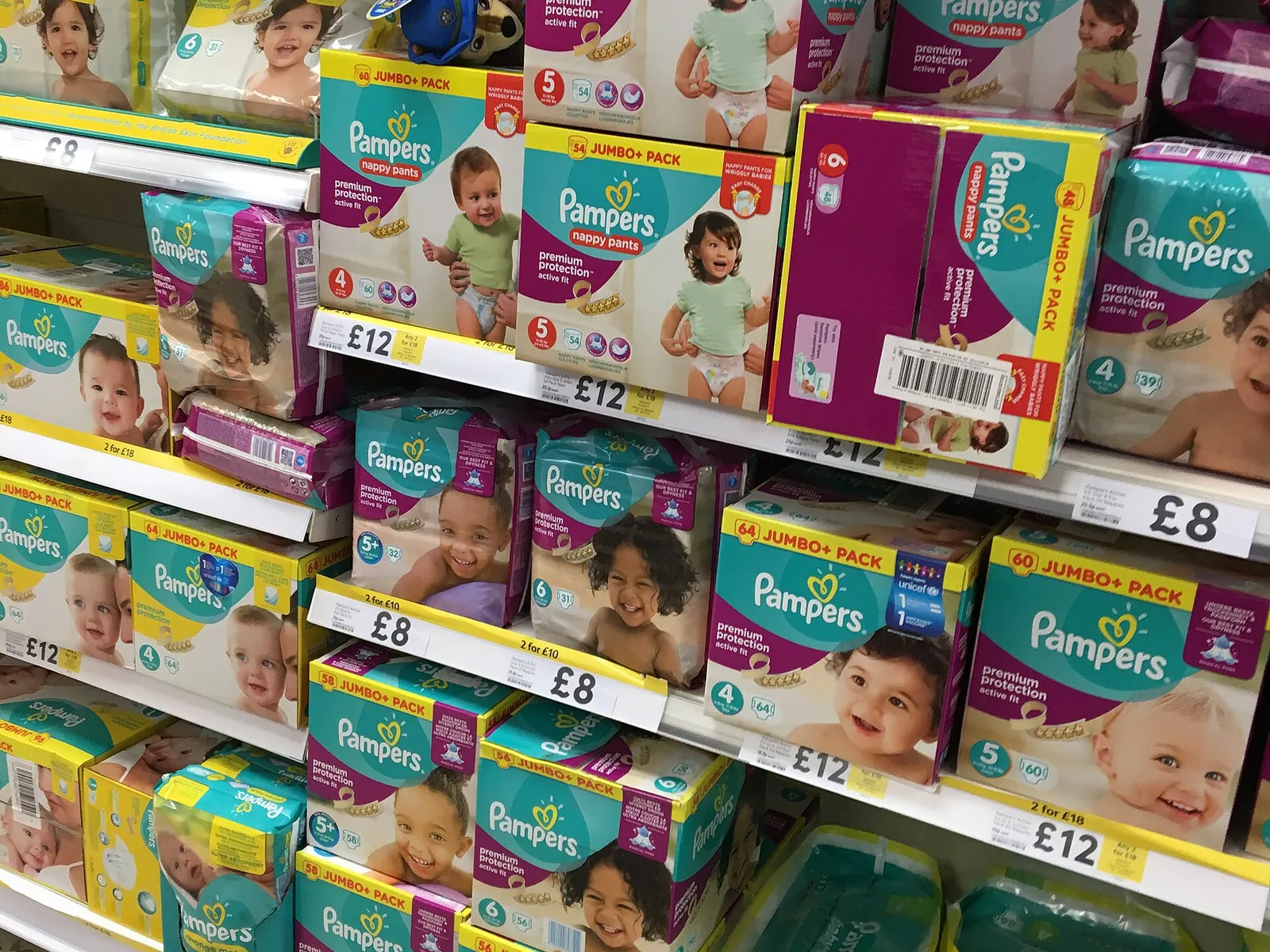
Pampers leads on value and on units. Its value share is higher than its unit share because its packs are larger and sell at higher prices than the budget brands.
| Brand | Share of diaper value | Share of diaper units |
|---|---|---|
| Pampers | 57.6% | 44.5% |
| Huggies | 13.4% | 14.2% |
| BabyJoy | 9.0% | 11.7% |
| MoliCare | 3.2% | 2.0% |
| Fine | 3.2% | 3.5% |
| Sanita | 2.8% | 3.6% |
| Fidelity | 2.6% | 3.4% |
| Alokozay | 2.1% | 4.1% |
| Lifree | 2.0% | 3.4% |
| PureBorn | 1.8% | 2.5% |
| Pure Baby | 1.0% | 5.3% |
Eleven brands passed 1% of value, and 18 brands sold at least once across 252 products. There was no private label in this category.
The order did not move. Pampers was first in all ten weeks, and Pampers, Huggies and BabyJoy made up the top three in every week. Weekly demand was steady too: no week was more than 18% from the ten-week average.
The best sellers are all one brand. All ten of the top diaper products were Pampers packs, led by Rash Protection Pants in size 6 (68 pieces) at 5.1% of value and size 5 (96 pieces) at 5.0%. Seven of the ten are pants and eight are size 5 or larger, so older babies in pants formats carry much of the category's value.
Adult diapers are a separate race. They took 10.1% of diaper value. There MoliCare led with 32.2% of adult value and Fidelity followed with 25.9%, while Pampers, Huggies and BabyJoy do not compete.
What do diapers cost per piece in the UAE?
The midpoint was about AED 1.31 per diaper. The middle half of units sold between about AED 0.95 and AED 2.08 per diaper, at the price paid after any discount.
| Brand | Midpoint AED per diaper | Middle half of units, AED per diaper |
|---|---|---|
| Alokozay | 0.94 | 0.63 to 1.10 |
| Sanita | 0.96 | 0.79 to 1.25 |
| BabyJoy | 1.20 | 0.84 to 1.76 |
| Fine | 1.29 | 0.93 to 4.52 |
| Pampers | 1.31 | 1.00 to 1.84 |
| Huggies | 1.42 | 1.17 to 2.43 |
| Fidelity, adult | 4.40 | 4.03 to 5.75 |
| MoliCare, adult | 7.82 | 7.71 to 8.57 |
So the leader is not the cheapest per diaper, but it is not far from the middle either. Pampers sat about 8% below Huggies per piece, helped by frequent promotions. The value brands, Alokozay and Sanita, were about a quarter cheaper per diaper than Pampers.
Per pack, the money is in AED 60 to AED 120. Packs at AED 80 to AED 100 took 26.5% of units and 33.7% of value, the largest single band. Packs from AED 60 to AED 120 together took 58.9% of units and 75.3% of value. The midpoint pack sold for about AED 72.
| Pack price band | Share of units | Share of value |
|---|---|---|
| Under AED 40 | 16.1% | 5.4% |
| AED 40 to 60 | 23.8% | 17.1% |
| AED 60 to 80 | 18.8% | 20.1% |
| AED 80 to 100 | 26.5% | 33.7% |
| AED 100 to 120 | 13.6% | 21.5% |
| AED 120 and over | 1.2% | 2.2% |
Large packs win. Baby packs of 40 to 69 diapers took 41.8% of diaper value and packs of 70 or more took 29.3%, against 18.9% for packs under 40. Pampers led both large-pack bands, with 66.1% of the 40 to 69 band and 81.2% of the 70-plus band. Under 40 pieces it was close: Pampers 33.1% and Huggies 28.3%. Small packs are where a challenger competes most evenly with the leader.
Regular shelf prices barely moved over the period. Of 204 diaper products present at both ends, 70.1% kept the same regular price from early September to early November, 17.6% went down and 12.3% went up.
How much of diaper demand is sold on promotion?
A large share. 39.6% of diaper units sold while the product carried a discount, at a typical depth of 20%. That is well above the 27.4% of units sold on promotion across the whole range.
| Brand | Share of units sold on promotion | Typical discount |
|---|---|---|
| Pampers | 46.0% | 20% |
| Sanita | 44.9% | 24% |
| BabyJoy | 43.6% | 20% |
| Alokozay | 35.3% | 17% |
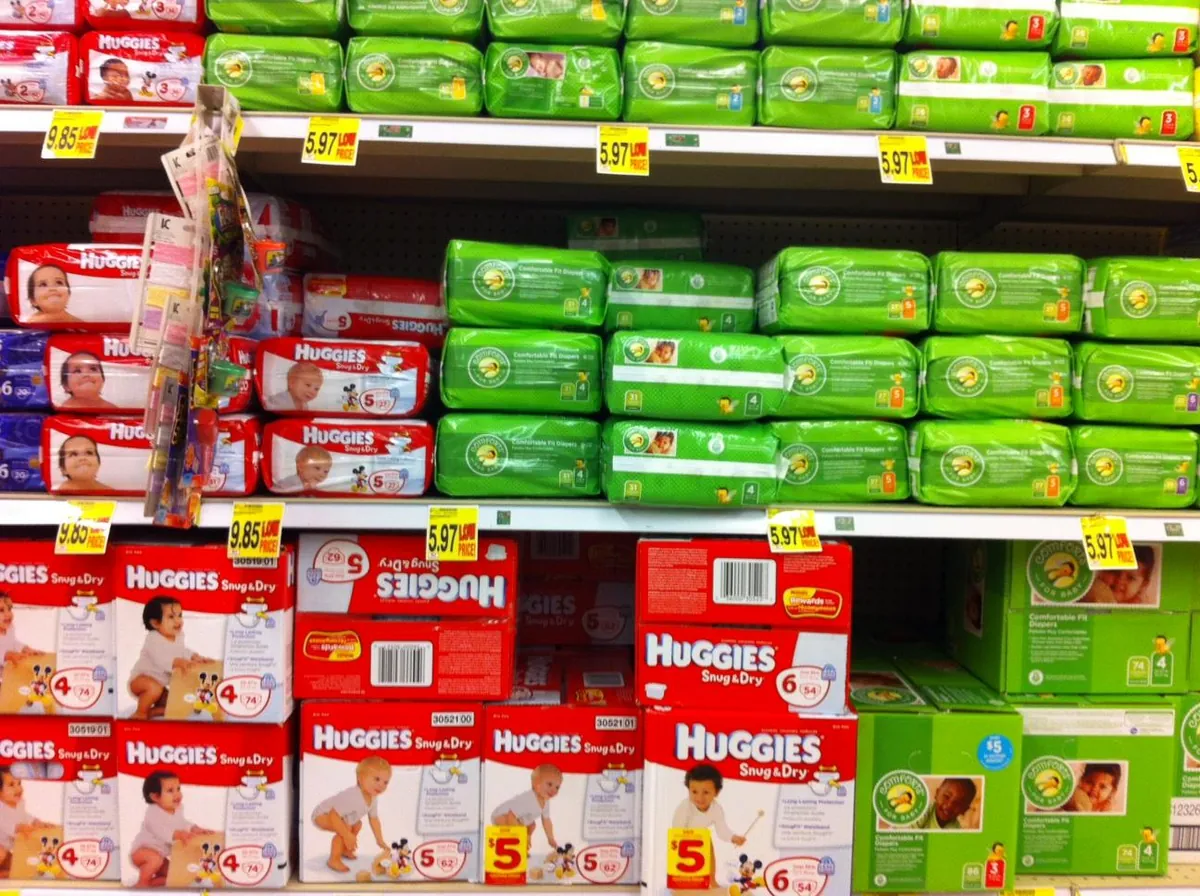
| Huggies | 18.0% | 18% |
| Fine | 17.6% | 13% |
| MoliCare | 0% | none |
| Fidelity | 0% | none |
The leader discounts the most often, not the least. The best-selling Pampers pants packs sold for a typical AED 82 against a regular price of AED 102 for much of the period, about 19% below shelf price. Huggies sold most of its units at full price and still held second place.
The adult brands did not discount at all and still held their positions. Buyers of adult diapers in this range did not need a promotion, while baby diaper buyers were used to one.
These figures show when units were bought, not whether a discount caused the purchase. A product on promotion for most of the period will sell most of its units on promotion whatever the effect of the discount.
How often are diapers out of stock?
Rarely for the leader. Products that sold were in stock 93.7% of the time across the period, and Pampers was in stock 98.8% of the time.
Huggies was the weak point, available 87.8% of the time, the lowest of the eight largest brands. BabyJoy was at 96.5%, Sanita at 93.3% and Fidelity at 93.0%. With Huggies, the runner-up was away from the shelf roughly one day in eight. That leaves room for Pampers and the value brands to take the sale.
For why an empty shelf matters to paid media, see ads on out-of-stock products.
Did diaper shares change from September to October?
A little, and toward the leader. Pampers rose from 56.7% of diaper value in September to 59.8% in October. BabyJoy rose from 7.8% to 10.1%. Huggies fell from 14.3% to 12.1%, in line with its weaker availability.
| Brand | September | October | Change, points |
|---|---|---|---|
| Pampers | 56.7% | 59.8% | +3.1 |
| Huggies | 14.3% | 12.1% | -2.3 |
| BabyJoy | 7.8% | 10.1% | +2.3 |
| MoliCare | 2.5% | 3.4% | +0.9 |
| Fine | 2.8% | 3.0% | +0.2 |
Two months is short, so treat this as direction, not trend. The ranking itself did not change in any week.
What should a diaper brand owner in the UAE do?
- Price per diaper, not per pack. The midpoint was about AED 1.31 a diaper. Shoppers compare packs of 26 to 112 pieces, so show the per-diaper price in ads and on the product page when yours is competitive.
- Compete in small packs first if you are a challenger. Under 40 pieces, Huggies was within five points of Pampers. In 70-plus packs Pampers held 81.2%. Small packs are where trial happens and where the leader is weakest.
- Plan promotions as a standing cost. 39.6% of units sold on promotion, and the leader ran a typical 20% off on its best sellers. If your margin cannot carry that depth, compete on per-diaper price instead and say so plainly.
- Keep the lead products in stock before you spend. The runner-up was unavailable about one day in eight. Pause or redirect ads on products that are out of stock, and check your own availability by size.
- Treat adult diapers as their own market. It is 10.1% of value, led by specialist brands, with no discounting by the leaders. Messaging, retail partners and search terms differ from baby diapers.
- Concentrate budget on size 5 and up, and on pants. Eight of the ten best sellers were size 5 or larger and seven were pants. Spread evenly across every size and count, a budget follows the range, not the demand.
To have this checked against your own range, message Mojo on WhatsApp.