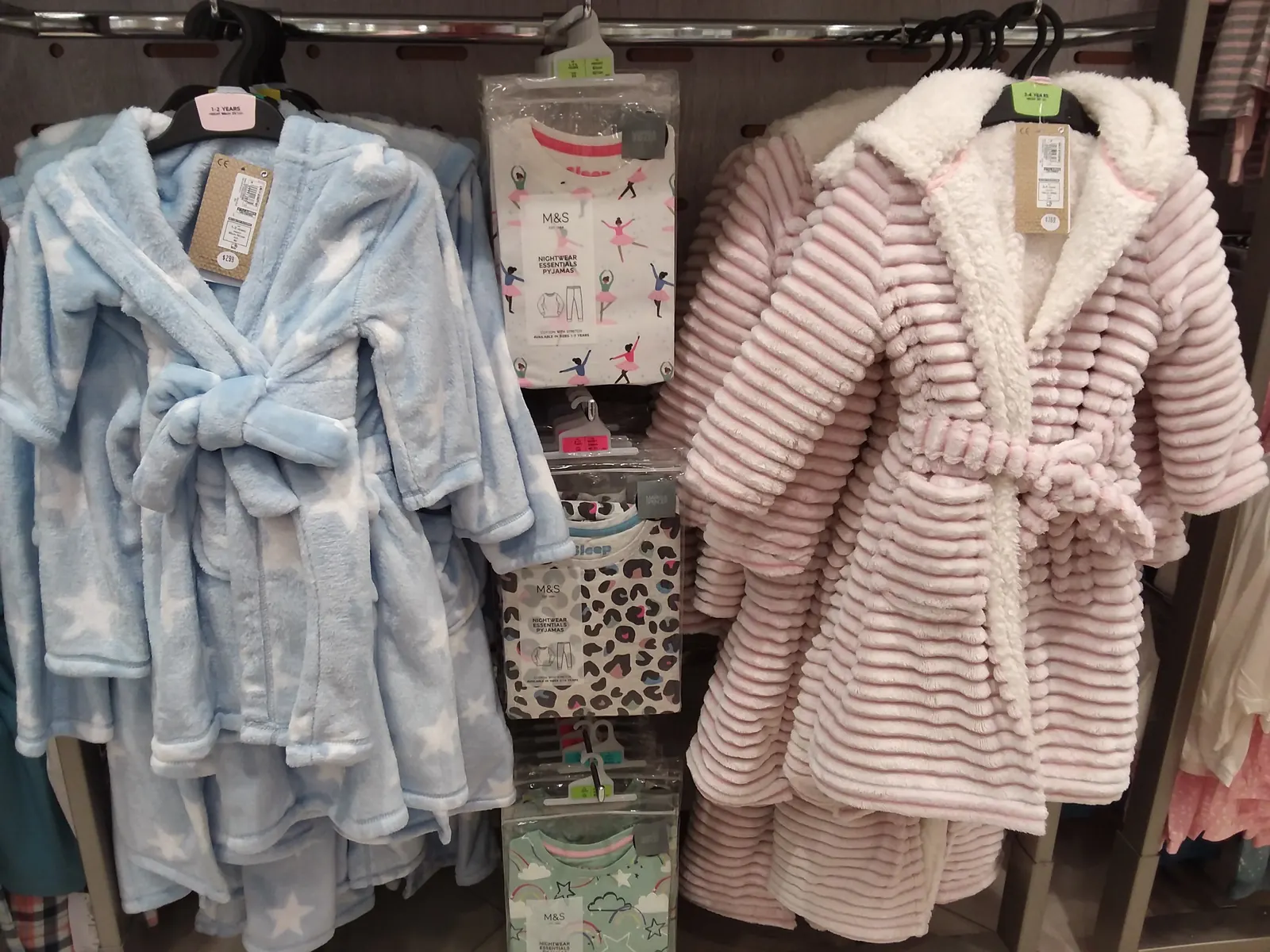
In the homewear catalogue compared, sets were about two in three (67.8%) of estimated demand for kids' home clothes from 3 September to 29 October 2026, far ahead of any single piece. Summer lines were 79.4% of estimated demand in September 2026, and winter lines led at 60.6% over the second half of October. Grey (13.5%) and beige (12.3%) were the top colours. A winter set was typically about EGP 850, and a marked-down summer set about EGP 450.
All figures are estimated demand, not reported sales, in one homewear catalogue, 3 September to 29 October 2026. They are not the whole market, and much of the summer side was marked down at the end of its season. Advice without a figure beside it is Mojo's judgment.
"Kids' clothes" is a far wider subject than this page. It covers the everyday sets and pieces children wear at home, not school or going-out clothes. Pyjamas are a separate subject and are not covered here. For fabric and fit, see our homewear buying guide.
Should you buy a set or separate pieces?
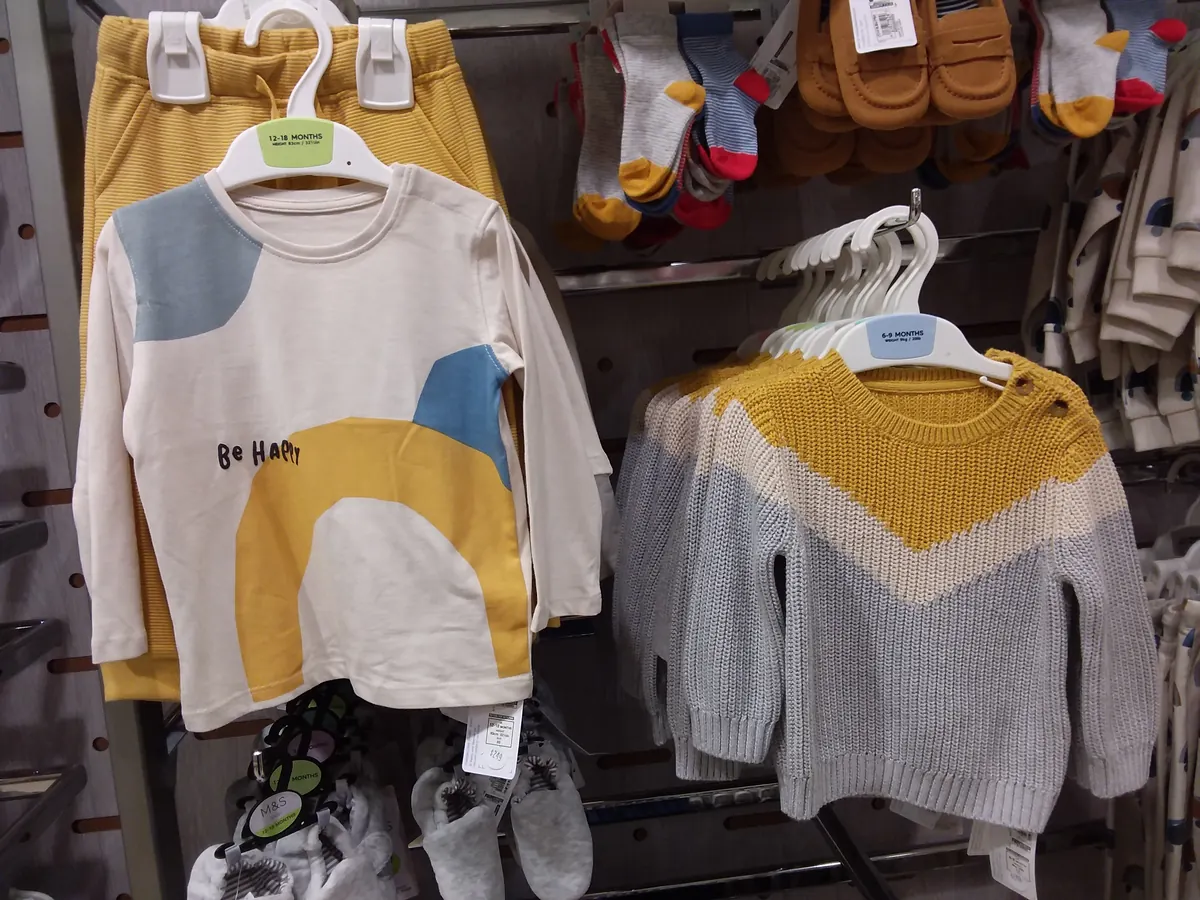
Most parents in this catalogue chose the set. Sets were 67.8% of estimated demand for kids' home clothes from 3 September to 29 October 2026, in the homewear catalogue compared. That lead held in both seasons, at 81.7% on summer lines and 64.0% on winter lines.
We do not rank the single pieces, because a few products carry too much of each. Tracksuit-style sets count inside the sets figure, so there is no separate tracksuit share, and we have no reliable figure for boys' sweatshirts on their own.
Our advice for parents, as judgment:
- Buy the set for the first outfit. Top and bottom match, and you have one price to compare.
- Add separates where wear is uneven. Knees and cuffs often give out before the top does, so a spare pair of trousers can extend a set's life.
- Check both pieces in a set. A top and bottom are not always equally generous in cut, so compare both measurements where they are given.
When do winter kids' home clothes take over from summer ones?
During October. In the homewear catalogue compared, summer lines were 79.4% of estimated demand for kids' home clothes in September 2026 and winter lines 7.8%. By October 2026 the split was 45.9% to 41.0%.
| Period, 2026 | Summer lines | Winter lines |
|---|---|---|
| First half of September | 75.3% | 9.1% |
| Second half of September | 82.4% | 6.9% |
| First half of October | 58.7% | 26.9% |
| Second half of October | 28.2% | 60.6% |
These are shares of estimated demand, so they show the mix changing. They do not show whether total demand for kids' home clothes rose or fell.
Winter lines also carry fewer products, and a few of them hold much of the winter share, so treat the winter side as direction. We would shop for winter home sets in October rather than wait for the first cold week. That is judgment, based on the switch above and on how much narrower winter choice is than summer.
Which colours lead, and do they change with the season?
Grey and beige lead, and over half of demand is neutral. In the homewear catalogue compared, from 3 September to 29 October 2026, grey was 13.5% of estimated demand for kids' home clothes, beige 12.3%, and neutrals together 57.0%. Navy (9.0%), black (8.3%) and white (8.2%) followed, closely enough that their order should not be relied on. Rose was 6.6%.
Grey's lead is narrow and recent. Beige led in September 2026 (14.2% against 12.5%), and grey led in October 2026 (15.0% against 9.7%).
Season explains much of that, because the two seasons have different palettes:
| Colour | Summer lines | Winter lines |
|---|---|---|
| Grey | 14.0% | 16.1% |
| Beige | 14.1% | about 1% |
| White | 7.9% | about 1% |
| Rose | 5.7% | 13.1% |
| Navy | 4.7% | 10.9% |
| Brown | 5.8% | 8.6% |
These are shares of estimated demand within each season, in that catalogue, from 3 September to 29 October 2026. Winter rests on few lines, so take the direction and not the exact share.
Beige and white almost vanish on winter lines even though they are still offered. That is the firmest colour finding on this page. Rose roughly doubled across all lines, from 4.5% in September 2026 to 9.5% in October, but most of that came from winter lines arriving: within summer lines it went only from 5.3% to 6.6%. White is the one colour that clearly lost share within a season, from 8.5% to 6.3% on summer lines.
For parents, our judgment is simple. Grey is the colour that holds up in both seasons, so it is the easy choice if a set will be passed to a younger sibling. A pale winter set is a minority choice, and it will show marks faster on a child who wears it all day.
Do boys' and girls' home clothes really differ?
In colour, yes. Boys' lines leaned to neutrals, at 63.5% of their estimated demand in the homewear catalogue compared, from 3 September to 29 October 2026, against 41.5% on girls' lines. Grey (21.5%), brown (11.5%) and teal (10.2%) led for boys. Rose (18.3%) and beige (16.6%) led for girls. About 78% of the estimated demand in that catalogue carried a boys' or girls' label, so these figures leave out the rest.
In volume, the figures say less than they seem to. Boys' lines took 61.6% of estimated demand and girls' lines 38.4% in that catalogue and period, but boys' lines were also 60.2% of the options offered. So this does not show stronger demand for boys.
The same care applies to October 2026. Girls' lines rose from 35.5% of estimated demand in September to 42.6% in October, while boys' lines fell from 63.0% to 56.3% of options offered. Demand followed the range, so this is no evidence of growing demand for girls.
What do kids' home sets cost in Egypt?
Most demand sits in the lower middle of the range. In the homewear catalogue compared, from 3 September to 29 October 2026, the largest band for kids' home clothes was EGP 250 to 500, at up to about half of estimated demand, and the typical price was about EGP 400.
| Price band (EGP) | Share of estimated demand |
|---|---|
| Under 250 | 10.4% |
| 250 to 500 | 52.4% |
| 500 to 750 | 21.3% |
| 750 to 1,000 | 9.7% |
| 1,000 and above | 6.3% |
About one in six (16.7%) sat under EGP 250 or at EGP 1,000 and above. Between about 47% and 62% of all demand in that catalogue and period was at marked-down prices, depending on how sale periods are counted, so this table partly reflects the end of summer.
A winter set typically cost a little under twice a summer set: about EGP 850 against about EGP 450, in that catalogue and period. Nearly all estimated demand for winter sets (98%) sat at EGP 750 or more. On summer sets, 61.1% sat at EGP 250 to 500 and 34.4% at EGP 500 to 750. This is not like for like, because 94.5% of summer-set demand was marked down against 0.6% of winter-set demand.
The band shift in October came mainly from season. Demand at EGP 750 and above went from 3.3% in September 2026 to about a third (33.8%) in October in that catalogue, and about nine in ten of that October demand was on winter lines. Prices of the same winter options held.
Why does a bigger summer set cost more?
Older-size ranges are priced higher. On summer lines in the homewear catalogue compared, from 3 September to 29 October 2026, 1.1% of estimated demand for baby sizes sat at EGP 500 or more, against 35.0% for sizes 7 to 10 and 76.1% for sizes 14 and up. This is mostly a difference between separate ranges, not one garment getting dearer with each size. If your child is near the start of an older range, we would first check whether a set from the younger range still fits.
Which sizes and colours are hardest to find?
Summer ones, by a wide margin. In the homewear catalogue compared, in October 2026, 54.7% of the summer options people wanted were available, against 89.5% of winter options, weighted by estimated demand. On sets alone, the figures were 51.9% and 89.5%. Winter had only just started, so that gap may narrow.
Among summer lines in October 2026, black was the least available colour at 40%, then white at 45%, against 58% for grey and 59% for beige. Baby sizes tended to be easier to find, at 64%, against 50% to 52% for sizes 2 to 13. The size gap is not firm, so take this as a tendency.
If you want a discounted summer set for next year, buy a size or two up and do not hold out for black or white. That is our judgment, and it only suits a child whose growth you can roughly predict.
What should kidswear brand owners take from this?
These figures describe one catalogue, not your account. Check them against your own results. The actions are Mojo's judgment.
- Build the range around sets. With sets at 67.8% of estimated demand in the catalogue compared, from 3 September to 29 October 2026, we would give them the lead in pages, photography and ads, and sell separates as add-ons.
- Plan each season's colours separately. Beige was 14.1% of summer-line demand and about 1% of winter-line demand in that catalogue and period. A palette carried over from summer would over-buy pale colours.
- Plan size runs by season too. Pooled, baby sizes took 25.7% of estimated demand on 20.7% of options, and sizes 7 to 10 took 16.9% on 20.1%. Across summer lines that gap is small, and on the few winter lines it is much sharper, with baby sizes at about two and a half times their share of options.
- Do not credit taste for a range decision. The boys' lead matched the options offered, at 61.6% of demand and 60.2% of options. Before you cut a girls' range, ask whether its share is simply following its depth.
- Separate season mix from campaign results. Demand at EGP 750 and above went from 3.3% to 33.8% between September and October 2026, mostly from winter lines. Your average order value can jump the same way with no help from your ads.
- Decide what ads do when sizes run out. Our guide to ads on unavailable products covers the options. For wider context on price, see our report on fashion pricing in Egypt.
If you sell kids' home clothes in Egypt and want a second opinion on your range and ads, message Mojo on WhatsApp and we will start with what we would fix first.