

Retinoids were the skincare ingredient with the most demand in Egyptian online beauty, at 10.5% of face skincare value, and products that name any ingredient took 61.3% of value. From 20 October to 7 November 2026, at two Egyptian online beauty retailers pooled, retinoids (retinol and retinal) led, with collagen at 8.3% and hyaluronic acid at 8.1% close behind. Niacinamide took 4.9% and vitamin C 3.5%. Products naming an ingredient took 55.2% of units, and their average price was 1.28 times that of products naming none.
All figures are for 20 October to 7 November 2026, with figures for one of the two retailers running from 20 to 30 October. They are estimated demand, not reported sales, at listed prices before discount codes or returns. Face skincare here means cleansers, moisturisers, serums and treatments, toners, masks, sunscreen, eye care, mists and make-up removers, on all brands, with sets and bundles left out. Every brand is reported neutrally, and the figures describe what shoppers chose, not whether a product works.
An ingredient counts only when the product name states it. A product that contains an ingredient without naming it counts as unnamed, and a product naming several ingredients counts under each, so the shares overlap and do not add up to 100%. About a quarter of named-ingredient value, 24.6%, sits on products that name two or more ingredients, such as niacinamide with tranexamic acid, or azelaic acid with hyaluronic acid.
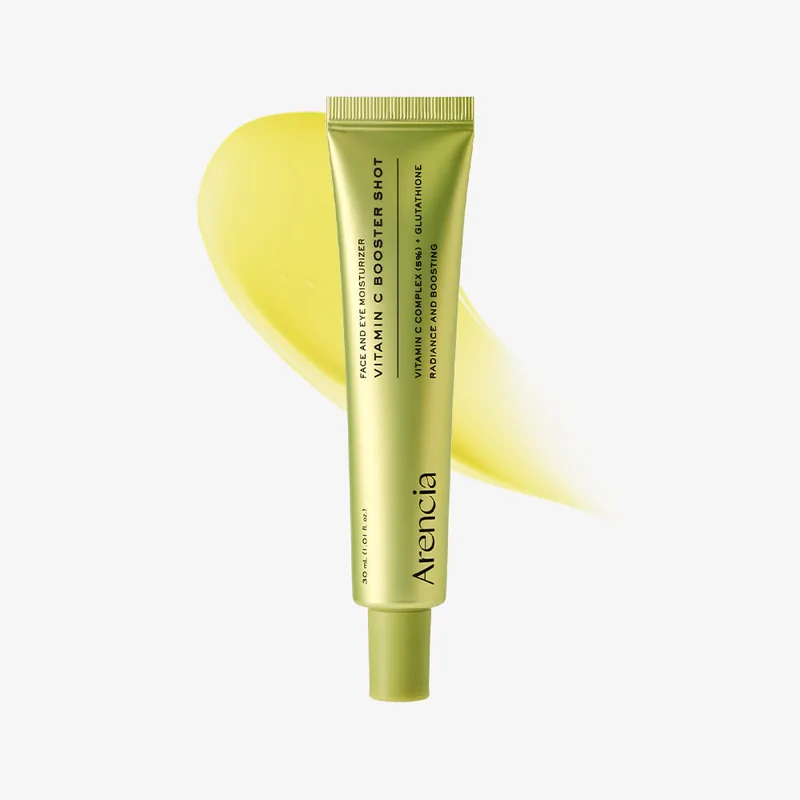 Arencia Vitamin C Booster Shot
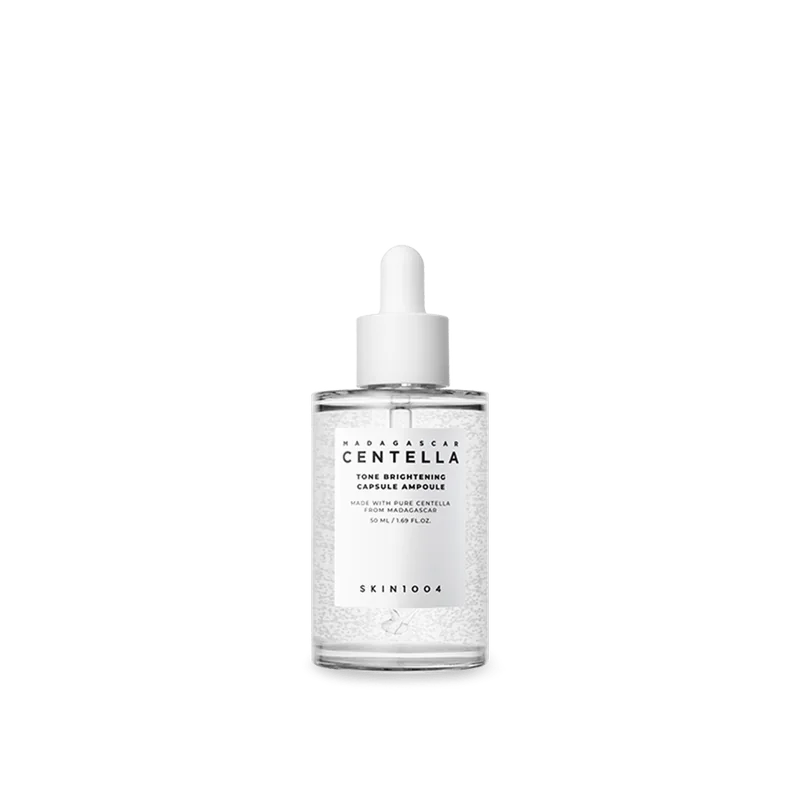 Skin1004 Tone Brightening Capsule Ampoule
Which skincare ingredients do Egyptians buy most?
Retinoids lead, then a close group of collagen, hyaluronic acid, centella, tranexamic acid with glutathione, and PDRN.
| Ingredient named | Share of face skincare value | Share of units |
|---|---|---|
| Retinoids (retinol, retinal) | 10.5% | 9.0% |
| Collagen | 8.3% | - |
| Hyaluronic acid | 8.1% | - |
| Centella and cica | 6.9% | - |
| Tranexamic acid and glutathione | 6.1% | - |
| PDRN | 5.2% | - |
| Niacinamide | 4.9% | 4.1% |
| Vitamin C | 3.5% | 3.4% |
| Peptides | 3.4% | 2.3% |
| Azelaic acid | 2.9% | 1.8% |
| Salicylic acid and BHA | 2.0% | 2.8% |
| Snail mucin | 1.5% | - |
| Bakuchiol | 0.4% | - |
Treat the middle of the table as a cluster, not a ranking. Collagen and hyaluronic acid are tied, and collagen is unstable: at one retailer its share of skincare value went from 13.1% before 30 October to 7.7% after it.
Hyaluronic acid is among the least concentrated of the large ingredients. Its value is shared across 62 lines, and six of them make up half of it. Centella is similar: 6.9% of value across 40 lines, with the top line holding only 14.7% and six lines making up half. One brand still owns its top end, though. SKIN1004 holds the four biggest centella lines, about 41% of centella value, and centella appears in serums, creams and sunscreens, with serums and treatments at 38.3%.
Our autumn report on Egyptian beauty gives retinoids 8.1% of skincare value from 1 September to 29 October 2026, also in first place among ingredients. It uses a wider skincare base and an earlier period, so the two figures are different cuts of the market, not growth.
In practice: a shopper comparing two products with the same claim should check the full ingredient list, not only the name. Many products contain actives they do not name.
Is retinol or retinal the one Egyptian shoppers choose?
Retinal. Products naming retinal took 64.7% of retinoid value, against 35.3% for retinol. Retinoids came first at one retailer (11.5%) and second at the other (8.9%, behind centella).
The lead rests on one product. Celimax The Vita-A Retinal Shot Tightening Booster held 52.1% of retinoid value, with demand at both retailers. Without that line, retinoids fall to 5.3% of face skincare value, which would put them in the middle of the table. In all, retinoid demand is spread across 32 lines from 24 brands.
Retinoids are not only serums. Eye creams hold 23.7% of retinoid value. On price, 72.7% of retinoid units cost EGP 500 to 1,000, and the typical retinoid costs about EGP 1,000. Bakuchiol, often sold as a gentler alternative, is counted separately, at 0.4% of face skincare value.
In practice: retinal and retinol are both strong actives. Start slowly, use sunscreen during the day, and ask a dermatologist or pharmacist first if your skin is sensitive, you are pregnant or you use other treatments.
How big is niacinamide in Egypt?
Mid-table. Niacinamide (نياسيناميد) took 4.9% of face skincare value and 4.1% of units, across 29 lines from 24 brands. Serums and treatments hold 91.4% of its value.
One serum carries half of it. Anua Niacinamide 10% + TXA 4% Serum held 51.2% of niacinamide value, and without it niacinamide falls to 2.4%. The two retailers differ sharply, at 6.8% at one and 1.8% at the other, so one store's shelf is a poor guide to the market.
Niacinamide demand splits into two tiers. By units, 36.6% cost under EGP 500, 14.1% cost EGP 500 to 1,000, 48.1% cost EGP 1,000 to 1,500 and 1.2% cost EGP 1,500 and up. The typical niacinamide product costs about EGP 1,000.
Niacinamide is usually paired. 75.0% of its value sits on products that also name a second ingredient, such as tranexamic acid, zinc or propolis, and 58.9% sits on products that state 10%.
Our serum guide gives niacinamide 6.4% of serum value from international brands, 1 September to 29 October 2026, and finds its value more evenly shared. The autumn report gives 2.9% on a wider skincare base over the same earlier period. Those are different bases and periods from this guide, so the differences are not growth or decline.
In practice: a budget niacinamide under EGP 500 is easy to find. Paying about EGP 1,000 or more usually buys a second named active, not more niacinamide.
How much demand does vitamin C for skin have in Egypt?
Less than its shelf presence suggests. Vitamin C (فيتامين سي للبشرة) is sold by 28 brands across 34 lines, more brands than any ingredient except hyaluronic acid, yet it took 3.5% of face skincare value and 3.4% of units. Serums and treatments hold 84.7% of its value.
One product leads. Arencia Vitamin C Booster Shot held 41.5% of vitamin C value, and without it vitamin C is 2.1%.
Vitamin C is priced in two clusters with little in between. By units, 42.6% cost under EGP 500, 12.4% cost EGP 500 to 1,000, 41.3% cost EGP 1,000 to 1,500 and 3.7% cost EGP 1,500 and up. The typical unit costs about EGP 500 to 1,000. The top line is priced around EGP 1,000, so the split between bands is sensitive to that one product.
The autumn report gave vitamin C 5.3% of skincare value on a wider base, 1 September to 29 October 2026. That is a different cut, not a decline.
In practice: vitamin C is a crowded shelf with one clear favourite. A new product competes either with many choices under EGP 500 or with one leader near EGP 1,000.
What do ingredient-named skincare products cost?
More than unnamed products. Their average price is 1.28 times that of products naming no ingredient, and they lean towards EGP 1,000 to 1,500.
For named-ingredient products, 36.1% of units and 53.3% of value sit at EGP 1,000 to 1,500, and 28.9% of units cost under EGP 500. For unnamed products, half the units (50.3%) cost under EGP 500. EGP 1,500 and up is small for both, at 2.7% of named units and 4.4% of unnamed units. The typical face skincare unit overall costs about EGP 500 to 1,000. These are listed prices before discount codes and are not per ml, so pack sizes differ.
Which ingredients are the budget and premium picks?
Salicylic acid and snail mucin are the budget ingredients. Salicylic acid and BHA take 2.0% of value but 2.8% of units, 59.9% of their units cost under EGP 500, and face washes and cleansers hold about 63% of their value. Snail mucin takes 1.5% of value, with 55.9% of units under EGP 500, across only 7 lines. COSRX holds the four largest, and Advanced Snail 96 Mucin Power Essence alone has 39.6%. Both cost about EGP 500. These bases are small, so use them for direction, not precise shares.
Peptides and azelaic acid sit at the top. Peptides take 3.4% of value but 2.3% of units, at an average of about EGP 1,000. Azelaic acid takes 2.9% of value and 1.8% of units, at a typical price of about EGP 1,500. It has only 4 lines, and Anua Azelaic Acid 10 Hyaluron Redness Soothing Serum holds 77.3% of its value. Because that serum also names hyaluronic acid, it is the largest hyaluronic acid line too, at 27.4%.
For the Korean share of each ingredient, see the K-beauty report for Egypt and our Korean skincare guide.
Does every retailer show the same ingredient ranking?
No. Each retailer, over its own dates, has a different top three.
| One retailer | The other retailer | |
|---|---|---|
| First | Centella 9.7% | Retinoids 11.5% |
| Second | Retinoids 8.9% | Collagen 9.8% |
| Third | PDRN 8.0% | Hyaluronic acid 8.7% |
| NAD+ | 6.6% | 0.6% |
At the second retailer, tranexamic acid and glutathione take 7.9%. The two periods differ in length, so compare rankings rather than exact shares. The point for sellers is that one store's ranking is not the market's.
What should a skincare brand owner do with this?
These are Mojo's judgements, not a promise of ad results.
- Name the ingredient, honestly. Products that name one took 61.3% of value at 1.28 times the average price of those that do not. Put the active and its strength in the title and the ad, and do not claim a result you cannot support.
- Do not mistake a category for a product. Retinoids, niacinamide, vitamin C and azelaic acid each lean on one line for 41.5% to 77.3% of their value. Entering one means competing with that product on price and format, not with the whole ingredient.
- Price against the tier you join. Retinoids cluster at EGP 500 to 1,000. Niacinamide and vitamin C split between under EGP 500 and EGP 1,000 to 1,500, with little in between. Pick a tier and give shoppers a clear reason to pay it.
- Pair actives with a purpose. 75.0% of niacinamide value and 24.6% of all named-ingredient value sit on products naming two or more ingredients. A pairing gives an ad a sharper promise than a single active.
- Look at the open clusters. Centella and hyaluronic acid are shared across many lines, so no single product owns them. Test there before spending on a category one line dominates.
- Plan by retailer. Rankings differ by store, so set budgets and product pages for each retailer instead of copying one store's leaders. Tie spend to your live product feed so ads pause when a product is unavailable; our guide to availability and ads explains how.
- Write Arabic pages for each active. نياسيناميد, ريتينول and فيتامين سي للبشرة are the Arabic names shoppers use. Give each its own page and ad group.
If you want this checked on your own range, send Mojo your skincare list and current media plan on WhatsApp and we will review ingredient claims, price position and budget by product.