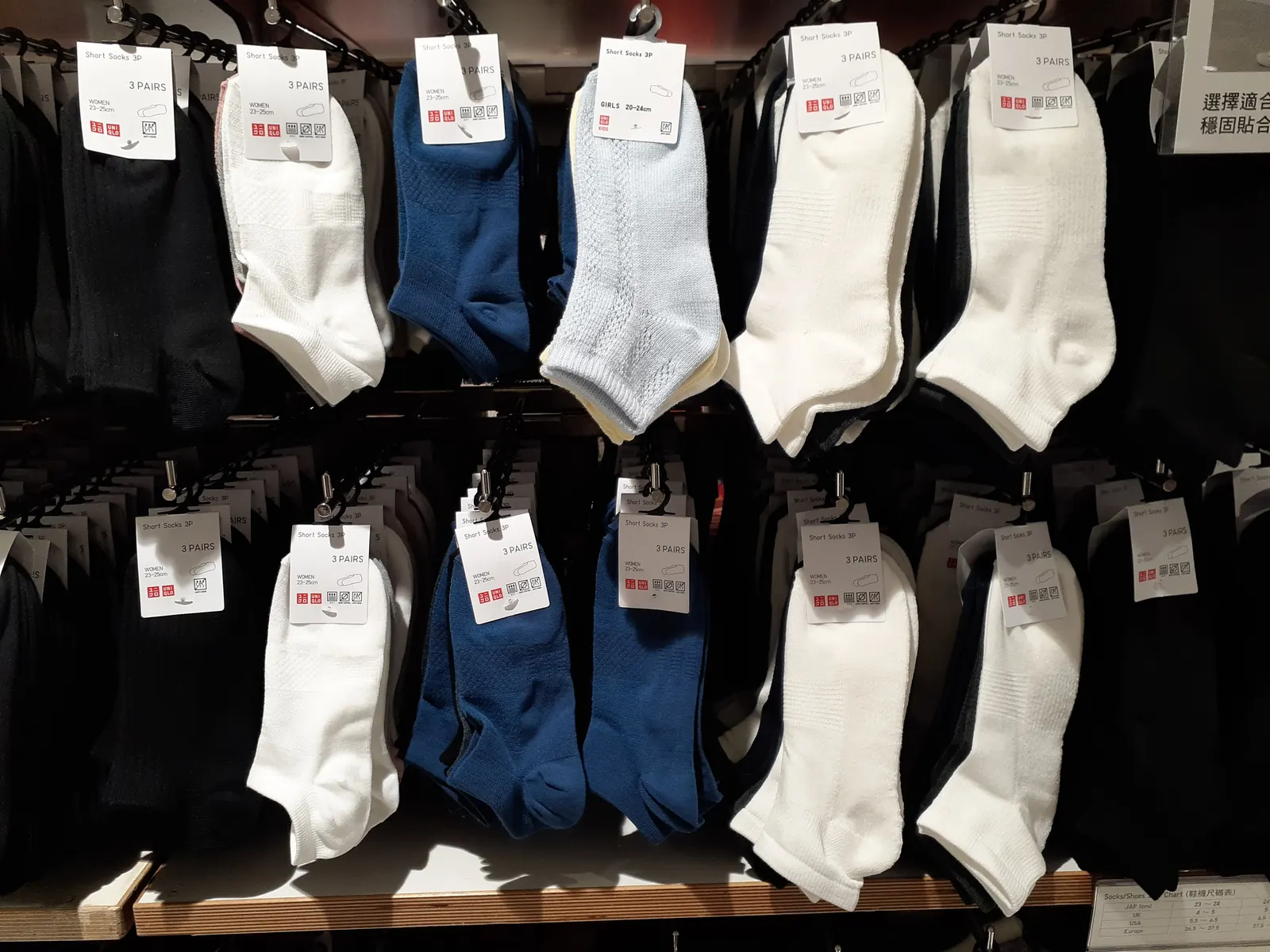
In the homewear catalogue compared, 3 September to 29 October 2026, 95.6% of estimated sock demand sat at EGP 250 or under per purchase, and a sock pack usually cost about EGP 150, or about EGP 50 a pair. Packs were about half to six in ten of purchases and about eight in ten of pairs bought. White led single-colour options at 36.2% of estimated demand, ahead of black at 21.6%, navy at 14.4% and marl at 9.8%. Demand split close to evenly by wearer: men's lines 35.4%, kids' 35.1% and women's 29.5%. In October, demand shifted from white towards black, and terry-lined socks rose from 12.1% to 30.6% of purchases.
All figures are estimated demand, not reported sales, in one homewear catalogue, 3 September to 29 October 2026. They are not the whole market, they follow the range that catalogue offered, and there is no prior year to compare. Socks were 3.02% of estimated demand in that catalogue. A line is one product, and an option is one colour and size of it. Advice marked as our judgment is Mojo's view, not a finding. For fabric and fit across homewear, start with our homewear buying guide.
Should you buy socks in packs or single pairs?
Packs are the cheaper way to buy socks per pair. In the homewear catalogue compared, 3 September to 29 October 2026, a pack usually cost about EGP 150 and worked out at about EGP 50 a pair, for men's, women's and kids' packs alike. Every adult single pair sat at EGP 100 or under, and men's singles were mostly EGP 50 to 100.
| Who wears them | Pack price per pair against the average single pair |
|---|---|
| Men | 0.70, about 30% less |
| Women | 0.76, about 24% less |
Three-packs were the standard pack. Packs were about half to six in ten of estimated sock purchases and about eight in ten of the pairs bought, because each pack carries several pairs. Kids' socks, leaving out tights, were nearly all packs. Women did not buy packs less than men: on the fullest count, packs were 62.4% of women's estimated purchases and 47.4% of men's.
Many packs do not say they are packs. Some listings at about EGP 100 to 150 offered white, black and marl together as one option, with no pack count in the title. Our judgment: if a plain listing costs well over EGP 100 and names three colours, ask how many pairs you get before you compare it with a single pair.
Did shoppers go off packs in October?
That cannot be shown. Packs fell from about seven in ten of estimated adult sock demand in September to about a third in October, at 69.0% and 36.1%. Over the same weeks, adult pack options became far more often unavailable. Weighted by demand, unavailability of adult pack options rose from 5.6% in September to 27.2% in October, while adult single pairs went from 3.6% to 2.3%. A shopper who could not find a pack bought something else. We do not take it as a change of preference.
Which sock colour has the most demand, and does it change by wearer?
White leads for every wearer, but black is a clear second overall, not navy. Among single-colour options in the homewear catalogue compared, 3 September to 29 October 2026, white took about a third of estimated demand, black about a fifth, navy about one in seven and marl about one in ten. Beige took 6.9% and pink 4.3%. Marl here is the grey-flecked shade sold as شانيه.
| Single-colour options, share of estimated demand | White | Black | Navy | Marl | Beige |
|---|---|---|---|---|---|
| All socks | 36.2% | 21.6% | 14.4% | 9.8% | 6.9% |
| Men's | 35.5% | 27.8% | 16.7% | 16.0% | 2.8% |
| Women's | 32.6% | 19.1% | 5.0% | 9.5% | 13.8% |
Men's demand ran white, black, navy, marl, with almost no beige. Women's ran white, black, beige, with navy at 5.0%. Women also bought pink, at 7.5%. Kids' socks, leaving out tights, ran white at 38.8% and navy at 16.0%, then light blue at 11.3% and pink at 7.9%.
Kids' socks rarely come in one colour. Leaving out tights, 33.9% of estimated kids' demand was on assorted-colour options and 32.3% on options of three named colours, so only about a third had a single colour. Our judgment: if the colour matters, for a school rule for example, check that the listing names one colour, not a mix.
Did black overtake white in October?
For men, yes. Among men's single-colour sock options in the homewear catalogue compared, black rose from about a fifth of estimated demand in September to about a third in October, and white fell from just under half to about a quarter, so men's black passed men's white in October. Across all socks, white fell from about half of single-colour demand to about a quarter, black rose from about one in six to about a quarter, and marl roughly doubled, from 6.4% to 13.3%.
The range on offer barely changed. White options went from 26.1% to 23.6% of available adult options and black from 18.6% to 18.9%. Part of white's fall may come from white options being unavailable more often in October, at 16.0% of demand-weighted white options against 2.4% in September. That does not explain the men's result: men's white and black were unavailable at about the same rate.
Which sock styles and sizes do men, women and kids buy?
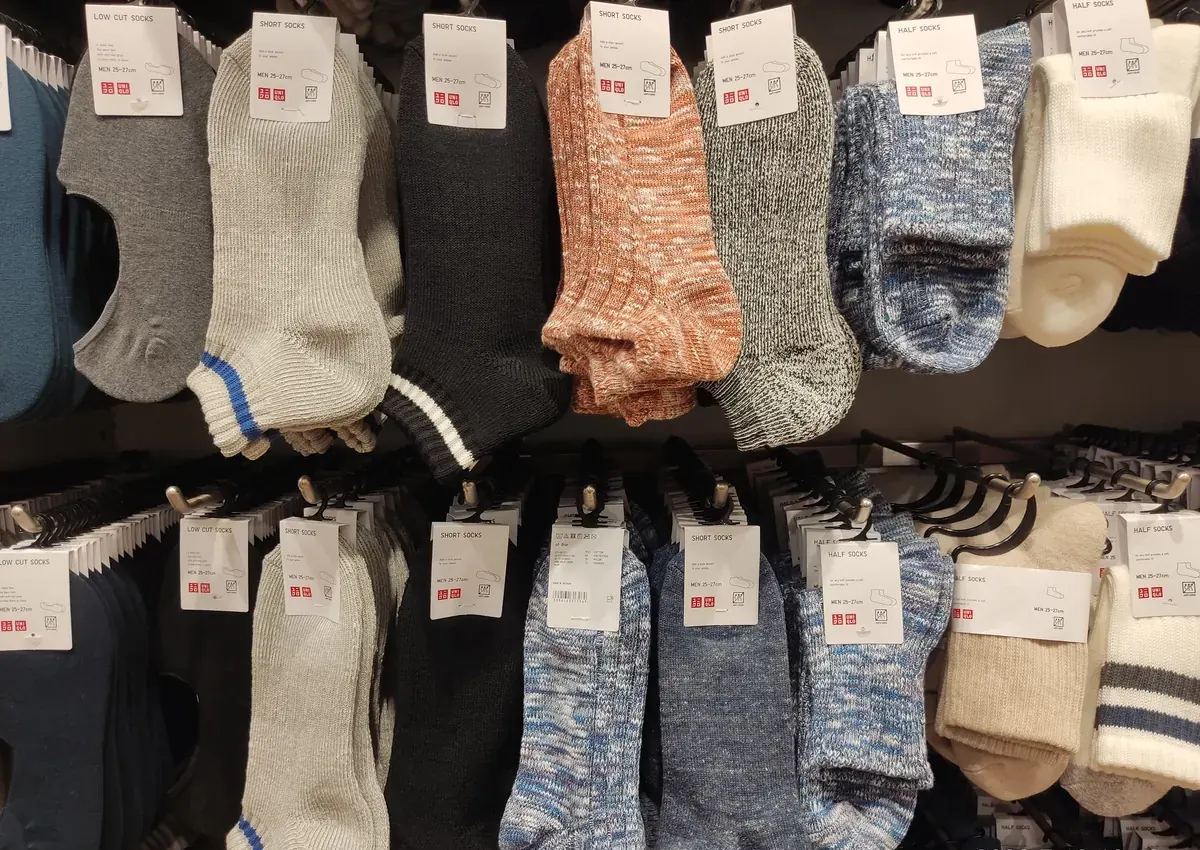
Men's demand centres on half-socket socks and women's on ankle socks. In the homewear catalogue compared, 3 September to 29 October 2026, half-socket styles took 45.4% of estimated men's sock demand, ankle 24.3% and crew or long styles 14.3%. No-show was 2.7% and low-cut 1.6%.
Women's demand was 53.5% ankle, 17.6% low-cut, 10.9% crew or long, 8.2% half-socket, 6.0% tights and 3.1% no-show. Low-cut and no-show together came to about one in five, carried mostly by a single line. Longer styles grew in women's socks in October: crew and long rose from 5.1% of estimated women's demand in September to 19.5% in October.
Sizes are simple for adults. In the homewear catalogue compared, 94.6% of estimated men's sock demand was in size 40 to 45 and 94.7% of women's in size 38 to 41. The rest was one size.
| Kids' age, leaving out tights | Share of estimated kids' demand |
|---|---|
| 1 to 2 | 7.7% |
| 2 to 4 | 14.2% |
| 4 to 6 | 19.6% |
| 6 to 8 | 20.6% |
| 8 to 10 | 17.0% |
| 10 to 12 | 14.8% |
| 14 to 16 | 5.0% |
Ages 4 to 10 took 57.3% of estimated kids' sock demand, and no single age took more than about a fifth. Our judgment: buy for the age range printed on the pack, and size up if the child sits at the top of it.
Do terry socks really take over in autumn?
Terry-lined socks, sold as فوطة, rose sharply in October, but much of that rise is the shift from packs to single pairs. In the homewear catalogue compared, terry went from 12.1% of estimated sock purchases in September to 30.6% in October, and among adults from 18.8% to 44.3%. Men's terry rose from 20.2% to 46.4% and women's from 17.4% to 41.3%.
Terry options went from 38.0% to 41.9% of available adult options, so the range did not drive the rise. Terry was already most of the adult single pairs on offer, at 63.7% in September and 73.9% in October. When adult demand moved from packs to single pairs, as described above, much of it landed on terry. Our judgment: treat terry as a real autumn choice for shoppers who want warmth, but not as proof that shoppers abandoned thin socks.
Are socks a winter buy, and will prices fall?
Socks sell all year. In the homewear catalogue compared, 89.1% of estimated sock demand from 3 September to 29 October 2026 was on lines sold all year, 7.9% on winter lines and 3.0% on summer lines. Outside promotional periods, October sock demand ran at 0.98 times its September pace, against 1.23 times for the catalogue overall. So socks stayed about flat while wider homewear rose, and their share of catalogue demand went from 3.79% to 3.03%.
Prices did not fall. For the same sock option, the median October price was 1.05 times September's, weighted by October demand, at 1.00 for men's and 1.02 for women's. No selling option fell in price, and about a fifth of demand was on options raised by more than 5%. The share of purchases at up to EGP 100 rose from 20.6% to 43.5%, but that came from buying more single pairs, not from lower prices.
| Purchase price band | Share of estimated sock demand |
|---|---|
| Up to EGP 100 | 30.6% |
| EGP 100 to 200 | 60.7% |
| Over EGP 200 | 8.7% |
These are purchase prices, packs included, so they are not prices per pair. Leaving out tights, 98.7% of estimated sock demand was at EGP 200 or under. For wider homewear prices, see our price report.
Women's socks were the most often unavailable. About one in five women's options, 20.0%, was unavailable on average, against 8.5% for men's and 9.0% for kids'. Weighted by demand, women's unavailability rose from 6.2% in September to 19.2% in October and men's from 3.4% to 13.0%, while kids' stayed near 4%.
What should you check before you buy socks?
These are our judgments, informed by the figures above.
- Work out the price per pair. A pack at about EGP 150 that holds three pairs is about EGP 50 a pair. Divide before you compare.
- Ask how many pairs a three-colour listing holds. A listing that names white, black and marl together is often a pack, even without the word.
- Check the size range. Adult socks mostly come in 40 to 45 for men and 38 to 41 for women. If your foot sits outside that, look for a listing that states your size.
- Pick the style for the shoe. Half-socket and ankle styles led for men and women. For trainers worn without visible socks, look for low-cut or no-show.
- Buy women's basics when you see them. Women's options were unavailable about one in five times, so waiting carries a real chance of a gap.
What should sock brand owners take from this?
These are questions for your own range, and your own orders should decide. All shares come from the homewear catalogue compared, 3 September to 29 October 2026.
- Name the pack in the title. Many three-colour listings at about EGP 100 to 150 did not say they were packs. In our judgment, "3 pairs" in the title and price per pair on the page is worth testing first.
- Keep packs available into autumn. Adult pack unavailability, weighted by demand, rose from 5.6% to 27.2% between September and October while adult pack demand fell. Your own data should show whether those shoppers came back. Before you put spend behind a pack, see our guide to ads on unavailable products.
- Plan men's colour around black as well as white. Men's black passed men's white in October with almost no change in the colours on offer.
- Keep women's basics available. Women's options were unavailable 20.0% of the time, about double men's and kids', and women's pack share was 62.4% on the fullest count.
- Lead autumn creative on terry for adults. Terry rose to 44.3% of estimated adult demand in October. In our judgment, show the lining and state the fabric in the title.
- Sell value per pair, not a discount. With about EGP 50 a pair the norm in packs, our judgment is that pairs for the price is the clearer message.
If you sell socks and want a second opinion on your range and ads, message Mojo on WhatsApp and we will start with what we would fix first.