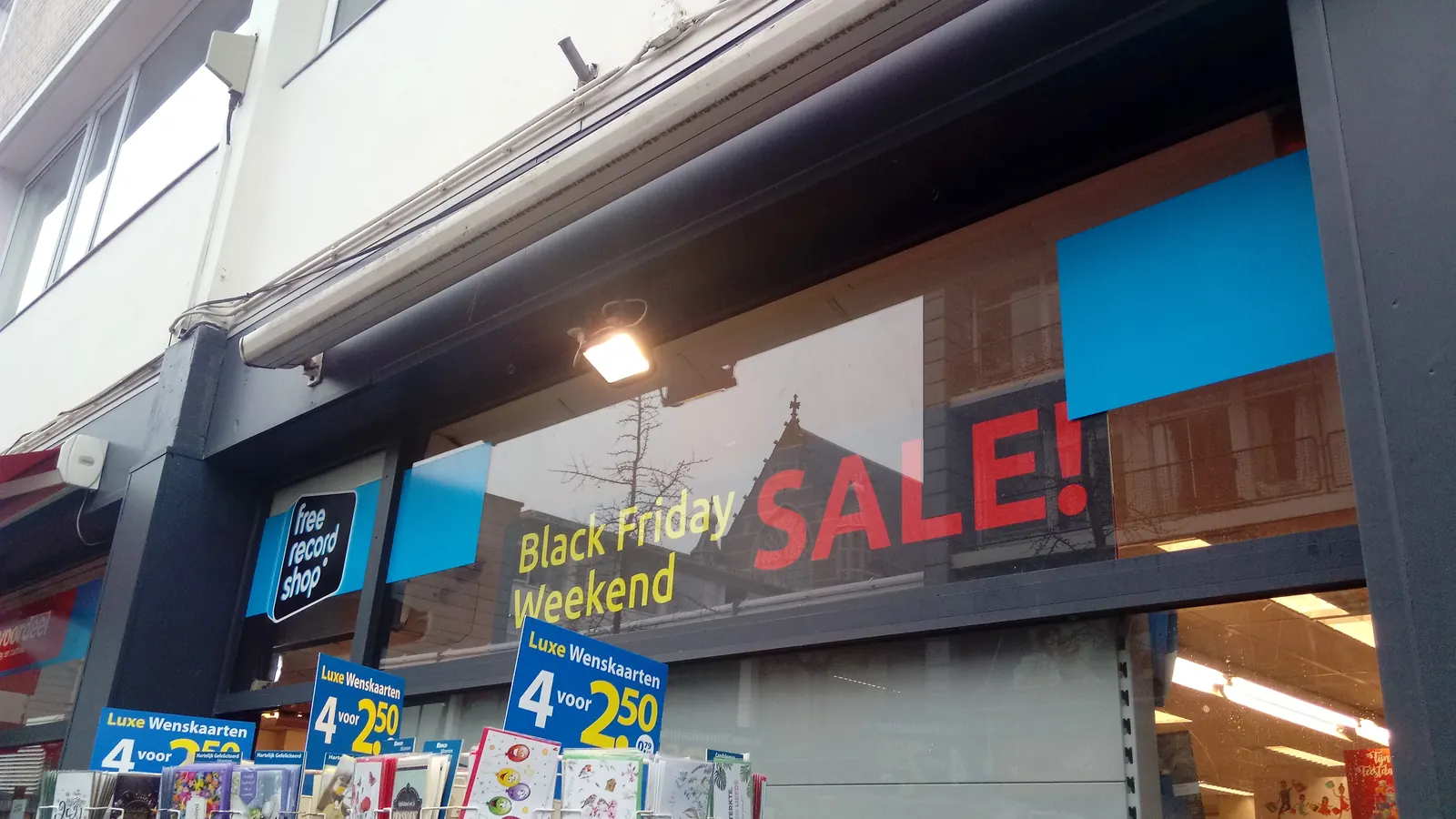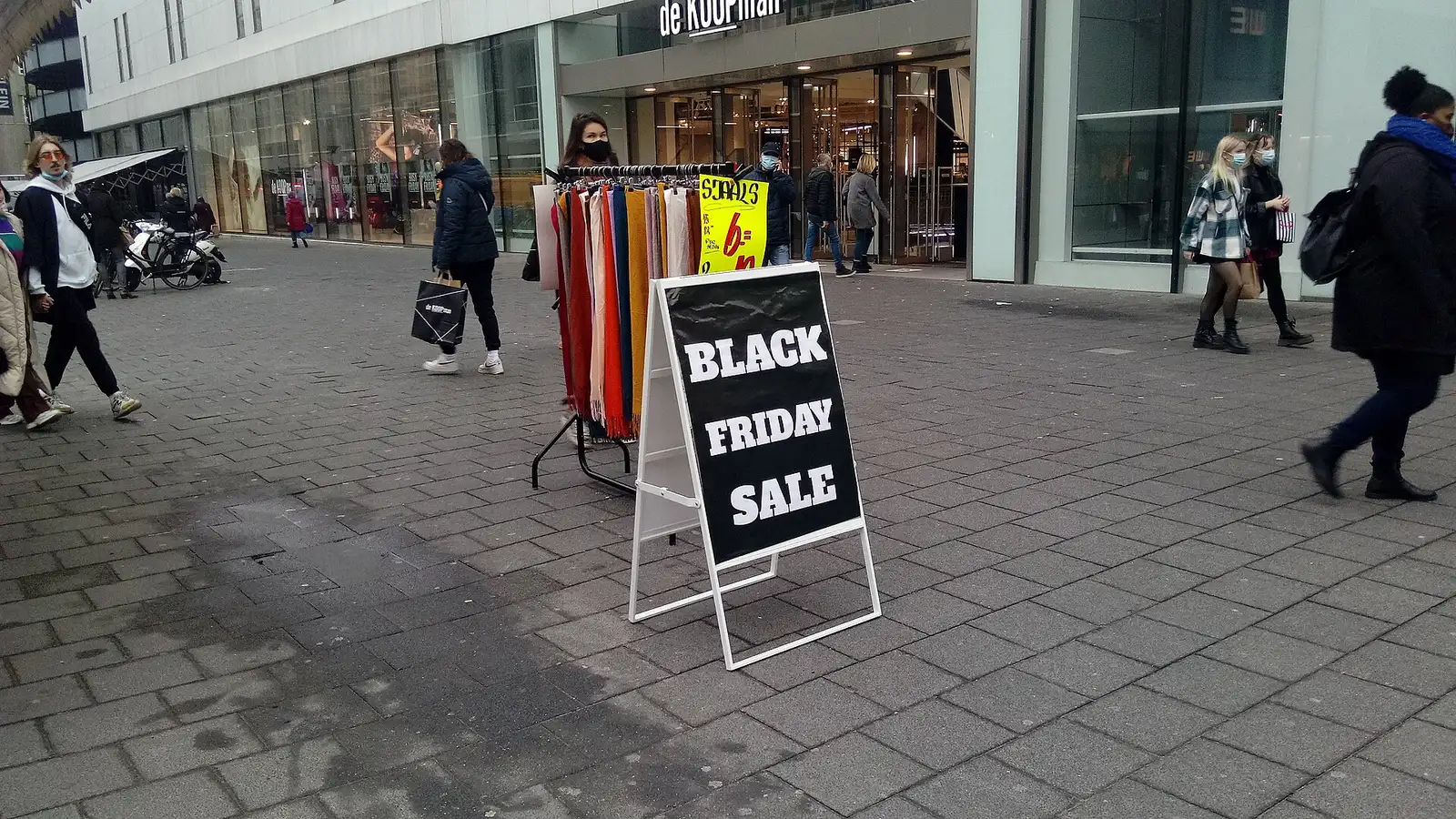
In September and October 2026, 73% of products at the online stores compared in Egypt, and 95% in Saudi Arabia, kept the same price for the whole two months, never moving by even 1%. Yet at 6 of the 24 stores that show was-prices, nearly every product carried a crossed-out higher price on nearly every day. For those stores a Black Friday badge is not news: the shopper has seen the same badge since September. This guide sets out what the autumn looked like, what moved in early November, and how to set a Black Friday price that reads as an offer.
The figures compare 366,204 products at 25 online stores, 7 in Egypt and 18 in Saudi Arabia, across beauty, electronics, fashion, homewear, home, books and other categories, from 1 September to 8 November 2026. A product's autumn price is its median selling price across September and October. Stores are not named, and every brand is reported neutrally.

The autumn was already on sale
A was-price, the crossed-out higher price beside the selling price, behaved like a store habit rather than a seasonal signal. Of the 24 stores compared that show one, 6 put it on at least 90% of their products on at least 90% of days. Another 7 showed one that consistently on fewer than 5% of products. The rest sat in between.
| Market and sector | Stores | Products | Showed a was-price on most days | Median advertised discount |
|---|---|---|---|---|
| Egypt, electronics | 3 | 36,738 | 97% | 23% |
| Egypt, beauty | 2 | 19,635 | 30% | 17% |
| Egypt, fashion | 1 | 3,079 | 51% | 30% |
| Egypt, homewear | 1 | 103,619 | 8% | 30% |
| Saudi Arabia, beauty | 5 | 46,518 | 24% | 24% |
| Saudi Arabia, home | 3 | 20,158 | 41% | 25% |
| Saudi Arabia, electronics | 1 | 8,026 | 99% | 27% |
| Saudi Arabia, fashion | 1 | 4,450 | 96% | 45% |
| Saudi Arabia, books and stationery | 3 | 92,361 | 1% | 25% |
"Most days" means at least half the days a product was listed. One Egyptian electronics store shows no was-prices at all, so that row's share covers the other two. The sector does not set the habit on its own: of the five Saudi beauty stores compared, one shows a was-price on almost every product and another almost never does. The useful comparison is with your direct competitor, not with the market average.
The advertised discounts were also tightly bunched. On products with a was-price, half the Egyptian badges said between 20% and 25% off, with a median of 24%. Saudi badges were wider: a median of 25%, a quarter at 33% or more, and 9% at 50% or more. That is the bar a Black Friday badge is read against. A 10% or 15% Black Friday badge is smaller than the badge many of these products wore on an ordinary Tuesday in October.
Prices barely moved, so the badge did the talking
Behind the badges, selling prices were remarkably still. Across September and October, 73% of products in Egypt never changed price by 1% or more; weighted by how much each product sold, the share was 60%. In Saudi Arabia it was 95% of products, and 82% weighted by sales. For most of the range, the only "offer" a shopper saw in the autumn was the crossed-out number.
Badges do seem to sell. In 7 of the 9 stores that put a was-price on only part of their range, badged products sold more units per product per day than the rest, by a median of about 18%. That is not proof the badge caused it, because stores tend to badge the products they are already pushing. But it explains why badges spread, and why a shopper learns to ignore them.
In Saudi Arabia the badge also has rules behind it. A store needs a discount licence from the Ministry of Commerce before it announces a sale, must show both the original and the reduced price, and the ministry has penalised stores for an "original" price the product never actually sold at. Saudi Arabia's licensed sales season this year ran from early August to 30 October, which is part of why so many Saudi badges were live in the autumn.
Early November: prices moved before the event
The first eight days of November, before any Black Friday offer, already showed movement:
- More prices went up than down. Counting each product by its autumn sales, 15% of products in Egypt cost at least 5% more than their autumn price and 6% cost at least 5% less. In Egyptian electronics, 25% were dearer. Part of that is the autumn's price rises carrying on, which our report on mobile prices in Egypt measured model by model. In Saudi Arabia the split was 7% dearer and 4% cheaper.
- Two long sales ended just before Black Friday. The fashion store compared in each market had run a deep autumn sale. By 8 November, 61% of items at the Egyptian store and 94% at the Saudi one were back above their autumn price, with no was-price shown. Any Black Friday offer at those stores now starts from the restored price, and a shopper who bought in October will remember the old one.
- Demand was already up. The same products sold at about 1.1 times their autumn daily rate in Egypt and 1.2 times in Saudi Arabia. In Egypt the month opens on payday, and our guide to the payday cycle explains why that lifts demand on its own.
How to set a Black Friday price shoppers believe
The autumn gives every store a simple test: is the Black Friday price below the price this product actually sold at in September and October? If it is, the offer is real, whatever the badge says. If it is not, the badge is the only thing that changed. Seven rules follow from that.
- Start from the selling price, not the was-price. Take each product's median selling price over the last six to eight weeks. That is the number a returning shopper remembers, and the one the offer will be judged against.
- Beat the everyday badge, or drop it. Where your products already wore a 20% to 25% badge all autumn, a Black Friday offer has to be a deeper cut on the selling price, or a different kind of offer: a bundle, a gift with purchase, free delivery or a longer warranty. Repeating the same badge with a new label adds nothing.
- Cut the products people buy. Choose the offer list by autumn sales, not by excess stock. A cut on a product that sold nothing in October lifts little in November; a real cut on a proven seller moves the week. Keep the list short enough that every item on it is a genuine saving.
- Do not restore a price and cut it in the same month. If a sale ended in early November, a Black Friday price at the old sale level is the same price, and shoppers who saw it in October will say so in the comments. If you need a full price to discount from, it has to have held long enough to be the real price.
- Keep the was-price honest. Show the price the product actually sold at, and for how long. In Saudi Arabia that is the law; in Egypt it is how a store keeps a shopper's trust after the event. The pattern our census of discounts in Egyptian fashion found, sales that never end, is exactly what makes a badge invisible.
- Keep the winners in stock through Cyber Monday. Black Friday falls on 27 November and Cyber Monday on 30 November. A product that sells out on Friday wastes every ad still pointing at it, so tie spend to availability, as our guide to stock and ads sets out.
- Judge the event against your own autumn. The week before Black Friday is not a fair baseline, because some prices had already moved by then. Your own September and October are.
For the media side of the same month, from audience building in October to the step-down in December, see the Black Friday ads playbook for Egypt. Saudi stores can set their prices beside our benchmark of prices and discounts at 17 Saudi online stores.
After the event
Mojo will compare the Black Friday and White Friday prices of the same products with this autumn baseline once the event is over: how many prices really fell, which badges were new, and what sold. Stores that set their offers against their own autumn price will be able to read that comparison against their own numbers.
If you want your offer list checked before it goes live, send Mojo your range and your September and October prices on WhatsApp and we will mark which offers will read as real and where the badge alone is doing the work.