Most channel advice written about Egypt is either a global playbook with the country name inserted, or an agency listicle. Neither answers the question a founder is actually asking, which is not "which channel is best" but "given how this market behaves, what should my money do next year". The behaviour comes first, because it constrains every channel choice that follows.
Four things about this market that decide everything downstream
Demand moves with payday. Egyptian consumer demand concentrates sharply around the end of the month. In our Egypt beauty demand work the peak day runs about 1.7 times a normal mid-month day, and the pattern repeats every month of the year. That single fact reshapes pacing, budget scheduling and how you read a bad week, and it is covered in full in the payday cycle guide.
Cash on delivery separates the order from the money. A large share of orders is paid at the door, and a share of those is refused. Reported revenue and banked revenue are therefore different numbers, and any channel comparison built on the first one is comparing the wrong thing. If COD is most of your volume, settle that measurement question before comparing channels at all.
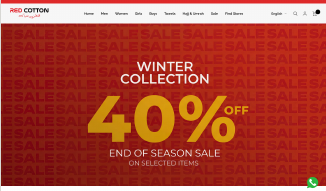
The market is trained to wait for a discount. Search interest in Egypt for Black Friday climbs from roughly 140 a month in August to about 480 in September, 1,900 in October and near 6,600 in November. Buyers have learned the shape of the year. On the supply side the habit is just as entrenched: in the storefronts covered by the discount census, discounting on the homepage is close to universal in women's fashion. A brand that competes only on price is entering the most crowded position in the market.
English and Arabic are two different demand pools. Commercial search demand exists in both, and it is smaller in English than founders assume. What people do not search for in English at any measurable volume is the how-to and cost questions: terms like the cost of running ads in Egypt return effectively nothing. That matters for content strategy more than for media, and it is the reason a blog aimed at those questions will not bring traffic here even when the underlying business problem is real.
Meta: still where the volume is
For an Egyptian store selling anything discretionary, Meta is the default and it should be. It creates demand rather than waiting for it, the audience is there at scale, and the catalogue formats do genuine work for anyone with more than a handful of products.
What it rewards here is creative volume and offer clarity, in that order. Accounts that stall usually stall because the creative stopped changing, not because the targeting was wrong. Budget follows the payday shape described above rather than sitting flat across the month.
The thing to get right early is what the account optimises toward. On a COD business that is a decision with real money attached, and getting it wrong means the algorithm spends months getting better at finding buyers who do not pay. The cash-on-delivery guide sets out which event to optimise for and how to feed paid orders back.
Google: demand capture, and how much there is to capture
Google does a different job. It does not create demand, it intercepts demand that already exists, so its ceiling is set by how many people are already looking for what you sell.
For a brand people search by name, that ceiling is high and search is usually the cheapest revenue in the account. For a new brand in a category where buyers search generically, it is much lower, and Shopping is generally the better entry than text ads because it competes on product and price rather than on keyword coverage.
The mistake worth naming is treating Google as a scale channel early. A founder who has been told search is higher intent often moves budget there before there is any brand demand to intercept, and reads the resulting low volume as an execution problem. It is not. It is the channel doing what it does.
TikTok: a creative capacity question, not a budget question
TikTok works in Egypt for the categories you would expect: visually demonstrable products, younger audiences, impulse price points. Where it fails is more predictable than where it succeeds.
It fails when a brand ports Meta creative across and funds it. The format rewards native, frequent, imperfect video, and it decays faster than Meta does, so a library that would last a quarter on Meta is exhausted in weeks. The honest entry requirement is whether you can produce native video every week. If you can, the cost per result is often the best in the account. If you cannot, the money is better spent elsewhere and the channel will read as a failure that was really a supply problem.
Influencers and organic: buying attention the site cannot convert
This is where the storefront comparison is most useful, because it says something uncomfortable about where the constraint really sits.
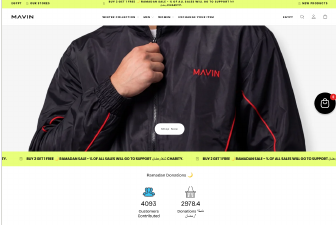
Across the 23 Egyptian storefronts in the review report, 21 showed no visible customer reviews at all, and review software is free or near-free. Every one of the 23 stated a free-shipping threshold, and not one stated when the order would actually arrive. The single brand that had built real review volume paired it with a 45 percent repeat rate.
Read that as a channel finding. Influencer spend and organic reach both deliver a visitor to a page. If that page has no proof, no delivery promise and nothing to distinguish it from an international chain entering at the EGP 199 price points documented in the price report, the visit is bought and then lost. The cheapest performance work available to most Egyptian stores in 2026 is not a new channel. It is switching on reviews and publishing a delivery window.
What a working setup looks like
At a small budget, run one channel properly. That means Meta, a simple structure, and enough creative to keep it fed, with a small branded search campaign if people search for you by name. Splitting a small budget across three channels produces three ad sets that never finish learning.
At a medium budget, add the second channel that matches your creative capacity rather than the one with the best case studies, and start separating prospecting from returning buyers so the two are not judged as one number.
At a larger budget, the problem stops being channel selection and becomes structure, incrementality and creative supply. At this point the useful question is no longer which channel, but which of these results would have happened anyway.
Note that none of those tiers is defined by a currency figure. Published cost benchmarks for this market are mostly unsourced, and a cost per result quoted without naming the account, the category and the window is not a benchmark. Derive yours from your own account: take a full month, split spend and paid revenue by channel, and compare next month against that rather than against a number from an article.
How to judge whether it is working
Pick the metric before the test, and pick one you get paid on. For most stores that is cost per paid order, or paid revenue against spend, with the delivery outcome included rather than assumed.
Then give the test a full cycle. Egyptian demand moves inside the month, so a two-week read taken across the wrong half of the month tells you about the calendar and not about the channel. A quarter's view also has to allow for the Q3 softness that affects most Egyptian stores, which is worth separating from account performance before drawing conclusions; the Q3 guide sets out how to split one from the other.
Finally, be honest about the counterfactual. The most expensive mistake in this market is not picking the wrong channel. It is scaling a channel that was capturing demand you already had, and calling it growth.
If you want an outside read on where your budget is actually working, tell us about the account.